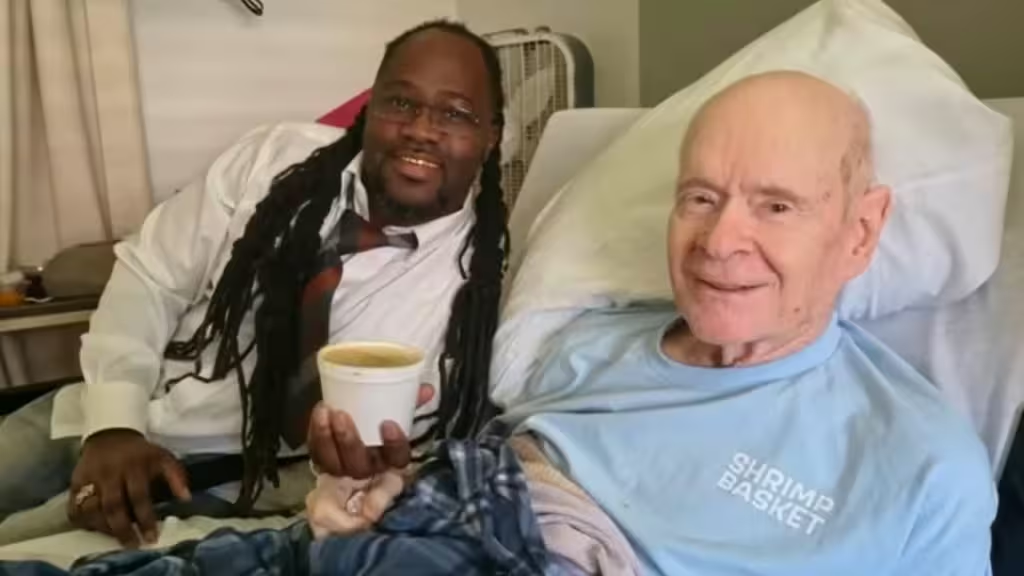
Students will explore how thoughtfulness begins with paying attention to others. Through listening, observation, and creativity, students will discover that thoughtful actions often come from noticing small details about someone’s needs, interests, or challenges and using that information to show care and support.
Thoughtfulness means paying attention to others and looking for ways to help, encourage, or support them.
Has someone ever done something thoughtful for you? How did it make you feel?
Can a small action be thoughtful? Why or why not?
Kindness 101 Video
Discussion Prompts
How did the person in the video show thoughtfulness toward others?
What clues helped them understand what people needed?
Why do thoughtful actions often have a big impact?
How can paying attention to others help us be more caring?
What is the difference between doing something nice and doing something thoughtful?
Activity Materials
Paper
Markers, crayons, or pencils
Sticky notes or index cards
Activity: Crafting a Care Package
Pair students with someone they do not know especially well.
Give students three minutes to interview one another. Students should learn about their partner. Encourage them to ask questions around things like:
Favorite hobby
Favorite subject
Something they enjoy doing
Something that makes them happy
Something they find challenging
Students will then create a care package for their partner using only paper and classroom materials.
The goal is to create the package that best fits the needs and interests of their partner. Explain that the package cannot contain real items and instead, students can create things like:
Encouraging notes
Coupons
Drawings
Advice cards
Fun reminders
A personalized game
A comic strip
A list of ways to help them during a tough day
Remind students that thoughtfulness is the priority. Artistic skills or creativity are not important.
Give students 10-15 minutes to create their care packages. Then students will present their care package to their partner.
The partner completes one of the following statements:
“The most thoughtful part was…”
“I could tell you listened because…”
Process the activity by discussing the following questions:
What made some care packages feel especially thoughtful?
Was it easier to think about yourself or someone else?
How did listening help?
What clues helped you understand what your partner might need?
How did it feel when someone remembered details about you?
Why do thoughtful actions often mean more than expensive gifts?
Guide students to recognize that thoughtful actions begin with noticing. Thoughtful people notice details. They listen carefully. They remember what matters to others. Then they use that information to show they care.”
Challenge students to look for an opportunity to be thoughtful to someone in the next 24 hours. It can be something as simple as picking up something someone dropped or holding the door. Remind them that thoughtfulness is noticing what matters to others and taking action to show you care.
Continue the Conversation
Why is paying attention an important part of being thoughtful?
How can listening help us better understand the needs of others?
Why do thoughtful actions often mean more than large gifts?
What are some ways we can notice when someone needs help?
How can thoughtfulness strengthen friendships and communities?
Journal Prompts
K-5
Describe a thoughtful thing someone has done for you.
What is one way you can be thoughtful toward someone today?
How can paying attention help you be a better friend?
6-12
Reflect on a time when someone noticed something you needed before you asked for help.
Why does thoughtfulness require observation and listening?
How can small thoughtful actions have a lasting impact on others